Scotland’s salmon rivers are world renowned, offering wild Atlantic salmon in outstanding natural surroundings.
Major rivers include the Tay, Spey, Dee, Tweed and Clyde, alongside renowned Highlands rivers such as the Ness, Beauly, Findhorn and Don. Salmon use a range of habitats throughout their life cycle, from clean, well-oxygenated spawning gravels in upper reaches to deeper pools, runs and holding lies in the middle and lower river. The mix of fast water, glides and pools, together with a healthy catchment of woodland and moorland, helps sustain Scotland’s nationally important salmon populations.
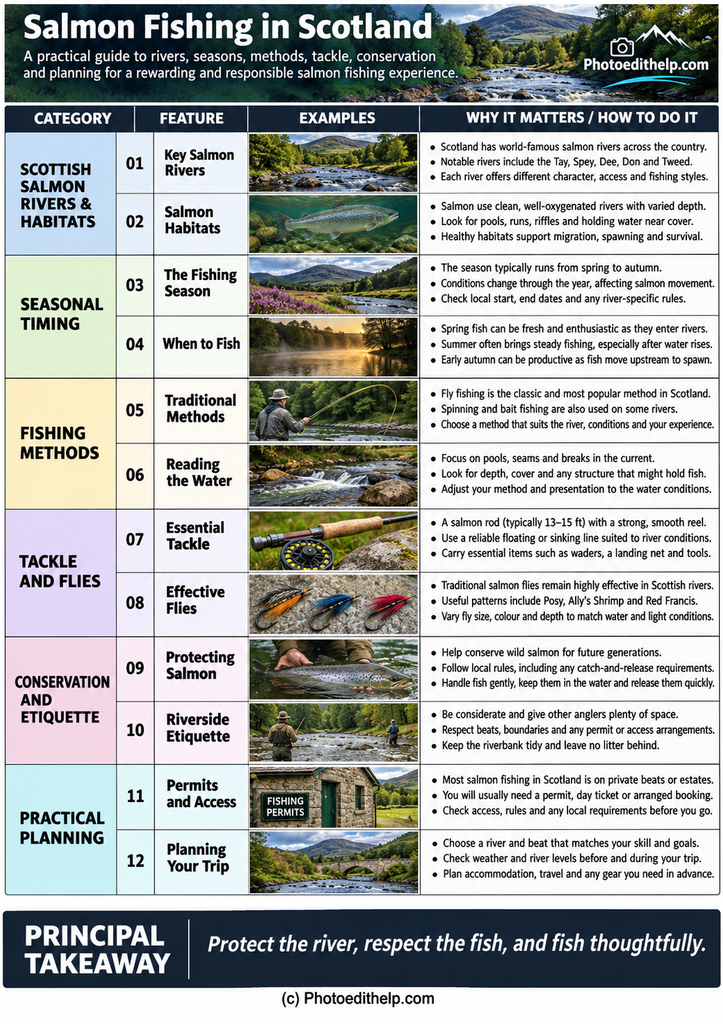
Salmon are anadromous, spending much of their lives at sea before returning to freshwater to spawn. Runs generally begin in spring, build through summer and often peak in late summer and autumn, with some fish continuing into early winter. Exact timing varies between rivers and with seasonal conditions, so it is wise to check local information before planning a trip. Fishing methods are mainly fly and spinning.
Fly fishing is the traditional and often preferred approach, presenting a lightly dressed fly to moving fish, while spinning uses a lure such as a spinner or spoon to cover water efficiently, particularly when water is higher or coloured.
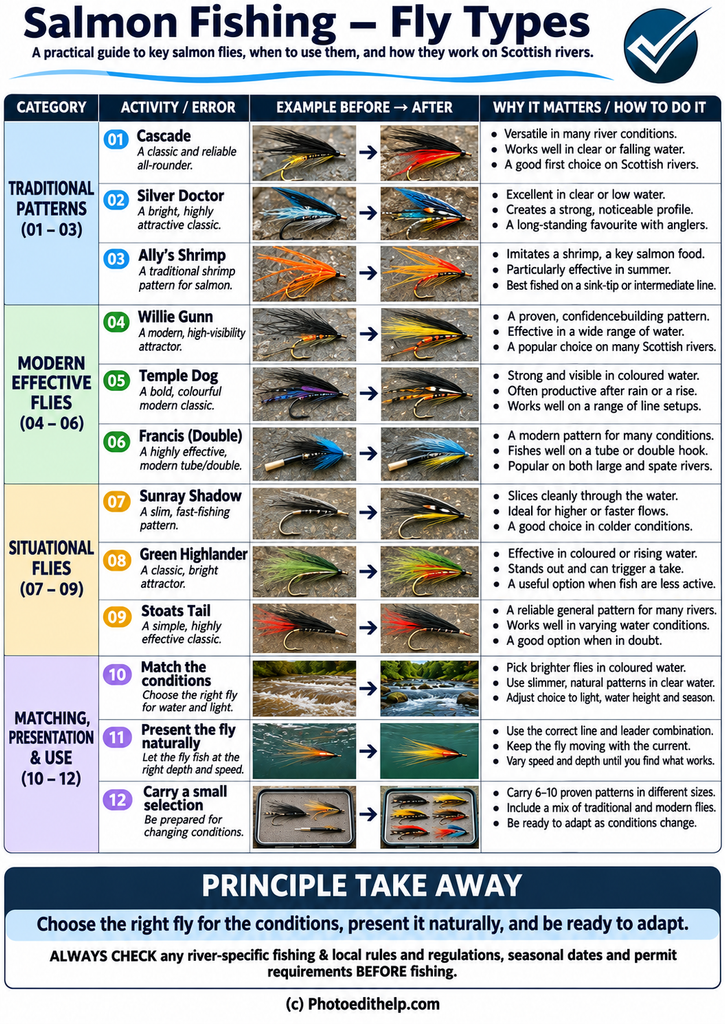
Popular salmon flies include traditional patterns such as the Cascade, Silver Doctor and Ally’s Shrimp, along with modern variations in a range of sizes and colours to suit water clarity and light levels. For spinning, lures in natural or bright finishes depending on conditions. In Scotland, catch-and-release is widely practiced and strongly encouraged to help conserve wild salmon. Handle fish with care, keep them in the water, and return them quickly and gently whenever possible.
Before fishing, check the legal requirements for the river you plan to fish. Most salmon rivers operate on a permit or beat system, with day, weekly or seasonal options, and some are managed by estates, angling clubs or local boards. Observing river etiquette helps everyone enjoy the water: respect other anglers’ space, avoid crossing beats without permission, keep noise to a minimum and leave no litter.
Weather and water conditions play a major role in success. A rise in water level after rain can bring in fresh fish, while very low, clear water often makes salmon more difficult to tempt. A practical plan includes checking river levels and forecasts, confirming permits, packing suitable waterproof clothing and wading gear, and allowing time to learn the river and adjust to the conditions on the day.
PRINCIPAL TAKEAWAY
Protect the river, respect the fish, and fish thoughtfully.
Full size versions of the infographics (overview) may be found here AND here (the flies)