How to use this guide
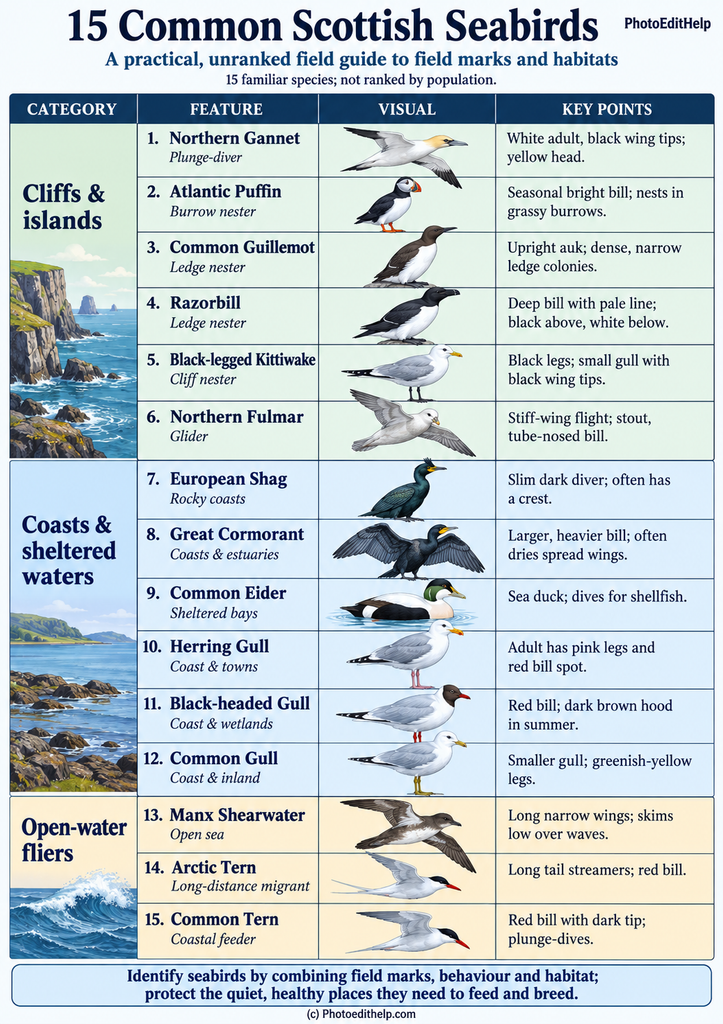
Scotland’s shores host around 24 regularly breeding seabird species. This guide selects 15 familiar species found at colonies or along the coast; numbering is for reference, not a national abundance ranking, since sightings vary by season and place. Start with silhouette, wing shape, bill and flight, then check habitat and season. A distant bird may be hard to identify from colour alone, and plumage changes with age and time of year. The broad groups below help narrow a first identification without suggesting that every member behaves alike. This Informatic may be downloaded here.
Cliffs and island colonies
Cliffs and offshore islands support large breeding colonies. The Northern Gannet is a powerful plunge-diver: adults are white with black wing tips and a yellow head. Atlantic Puffins are compact, with a bright seasonal bill, and nest in burrows. Common Guillemots stand upright on narrow ledges and gather densely; Razorbills have a deeper bill marked by a pale line. Black-legged Kittiwakes have black legs and nest on cliff ledges, while Northern Fulmars glide on stiff wings and have a stout, tube-nosed bill. Look at shape and behaviour as well as colour to separate these similar-looking cliff birds.
Coasts, sheltered waters and open sea
Nearshore species include European Shags, Great Cormorants, Common Eiders, Herring Gulls, Black-headed Gulls and Common Gulls. Shags are slimmer, often show a small crest, and fish close to rocky coasts; larger cormorants have a heavier bill and are often seen drying outstretched wings. Male Eiders are striking black and white, while females are mottled brown; both dive for shellfish. Gulls vary in size and bill and leg colour, but age and season alter their plumage, so use several field marks together. Offshore, Manx Shearwaters skim low over waves on long, narrow wings. Arctic and Common Terns hover and plunge-dive; Arctic Terns have long tail streamers, while Common Terns usually show a dark tip to the red bill.
Conservation and responsible watching
Observe from public paths and keep well back from nesting sites; disturbance can cause adults to leave eggs or chicks exposed. Scotland’s seabirds depend on healthy marine food webs and secure breeding places. NatureScot’s monitoring shows long-term declines in many assessed species, with different trends between species and periods. Food availability, warming seas, severe weather, disease and predators can all affect survival or breeding success. Note the date, place, habitat and field marks, and report sightings through a recognised recording scheme. Watching responsibly and supporting habitat protection helps keep these remarkable birds part of Scotland’s coasts.
PRINCIPAL TAKEAWAY
.
Identify seabirds by combining field marks, behaviour and habitat; protect the quiet, healthy places they need to feed and breed.
(c) Photoedithelp.com