Behind every breathtaking wildlife image lies a silent pact between the creator and the natural world. While the aesthetic result is often celebrated, the true hallmark of a great photographer is the responsibility exercised behind the lens.
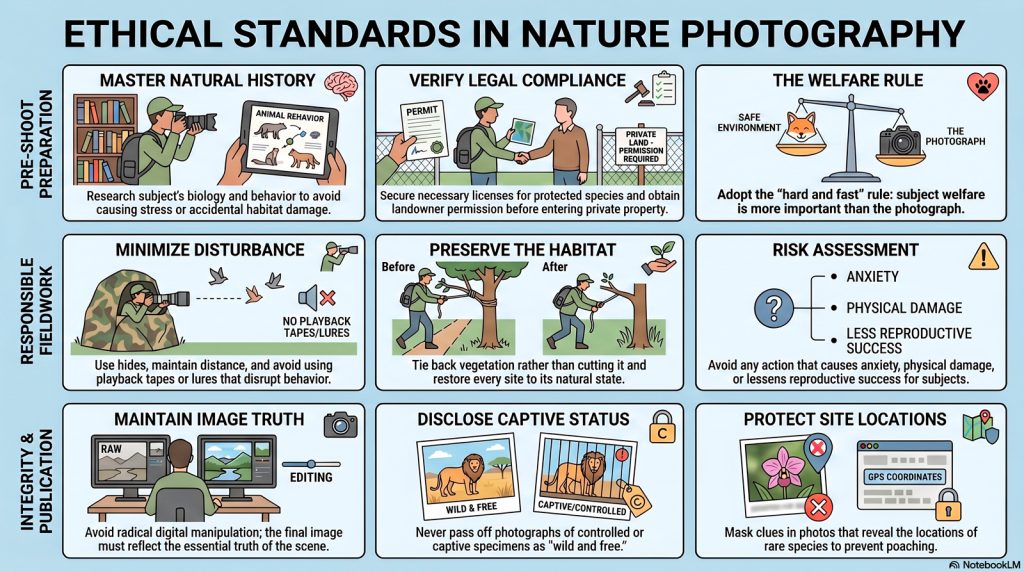
Think of this code as a guide to being a good guest in nature. It may be downloaded from our sister site Photoedithelp.com at A4 size here.
Top 5 Most Impactful & Surprising Takeaways
- Know the Law: Under the Wildlife and Countryside Act 1981, causing stress to a bird near its nest is a crime. This is especially true for rare “Schedule 1” birds. In Scotland, it is illegal to harass Schedule 1A birds like the White-tailed Eagle or birds that “lek,” such as the Capercaillie.
- The “Two-In, One-Out” Hide Trick: Birds aren’t great at counting! To keep them acting naturally, two people should walk into a hide, and then one leaves. This tricks the bird into thinking it’s safe. Expert tip: Start setting up your hide at least a week in advance so the bird gets used to it slowly.
- The Science of Fungi: Did you know you usually can’t identify a mushroom from a photo alone? To help science, you may need to collect a few specimens of different ages using a knife. Just be careful—four species, like the Bearded Tooth (Hericium erinaceum), are legally protected from collection under Schedule 8.
- Protect Your Secret Spots: If you find a rare plant or animal, be careful with wide-angle shots that might lead to the site being trampled.
- The “Essential Truth”: We all love a bit of editing, but the Code says a nature photo should show what you actually saw. You can clean up a few distracting spots, but adding or moving things digitally is a big no-no if you want to stay ethical.
As photographers, we are more than observers; we are stewards of the wild.